Field Note
Fieldwork as a visual practice
Observation, walking, drawing, and photography can become design tools when they are treated as forms of active attention.

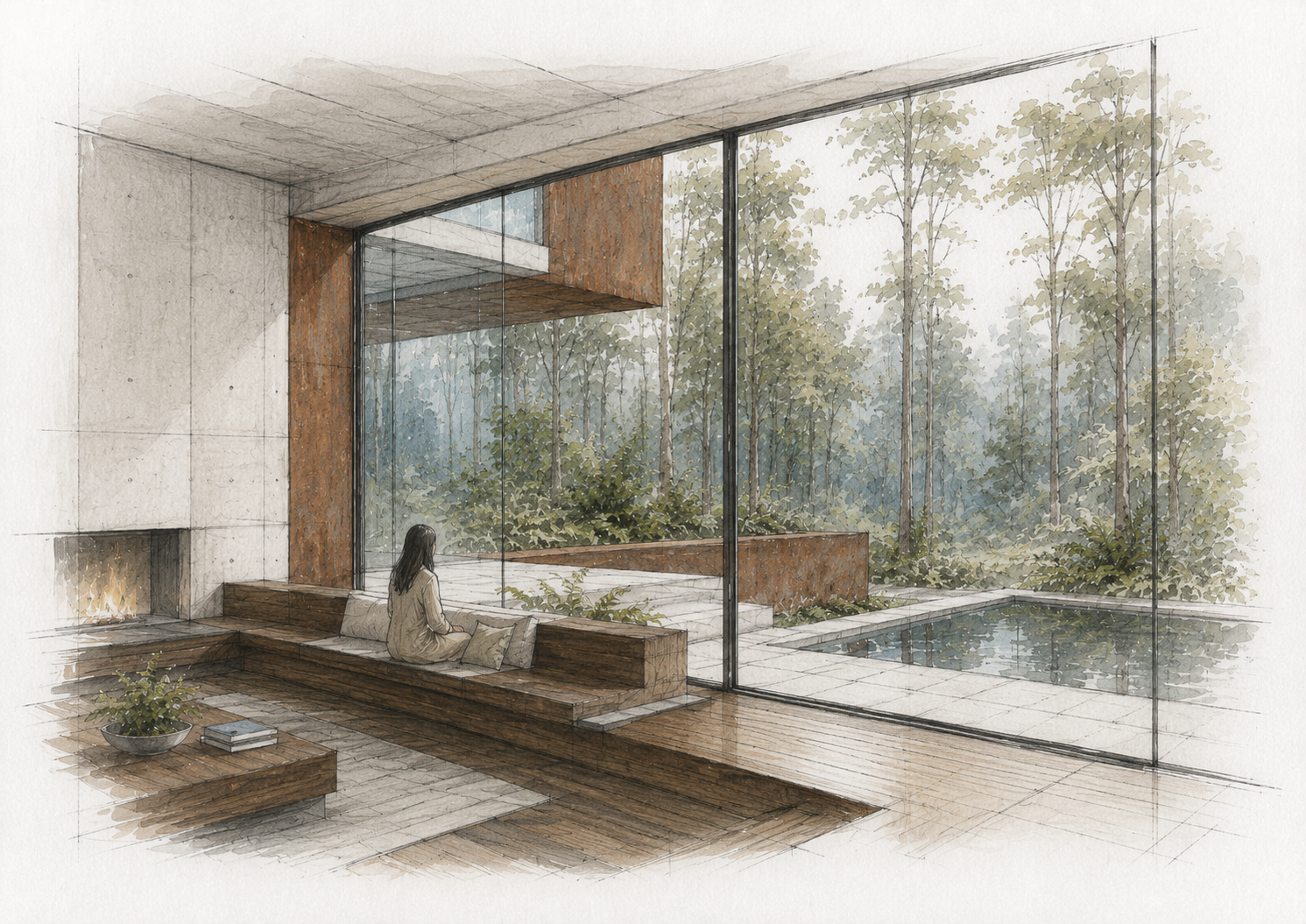
Fieldwork begins before a project knows what it is looking for. A walk, a photograph, a note on weather, or a fast sketch of an edge can all become part of the same act of noticing. The point is not to collect everything, but to learn what the place repeatedly offers.
I think of fieldwork as a way of slowing down visual judgement. It creates time between first impression and design response. That pause matters because places are rarely understood through a single view.
Looking With A Sequence
A sequence of images can reveal more than one perfect frame. Repetition starts to show patterns: where thresholds occur, how light moves, which materials hold wear, and how people choose to occupy informal edges.
Drawing changes the pace again. It makes the hand choose what the camera can take too quickly. A line can register weight, rhythm, hesitation, and scale in ways that are not purely descriptive.
From Evidence To Atmosphere
The most useful fieldwork is both factual and atmospheric. It records information, but it also preserves the feeling of being there. Design can then respond to conditions rather than simply borrow appearances.