Reading
Margins, captions, and quiet context
Supporting text can change how an image is read, not by explaining everything, but by setting the pace of attention.

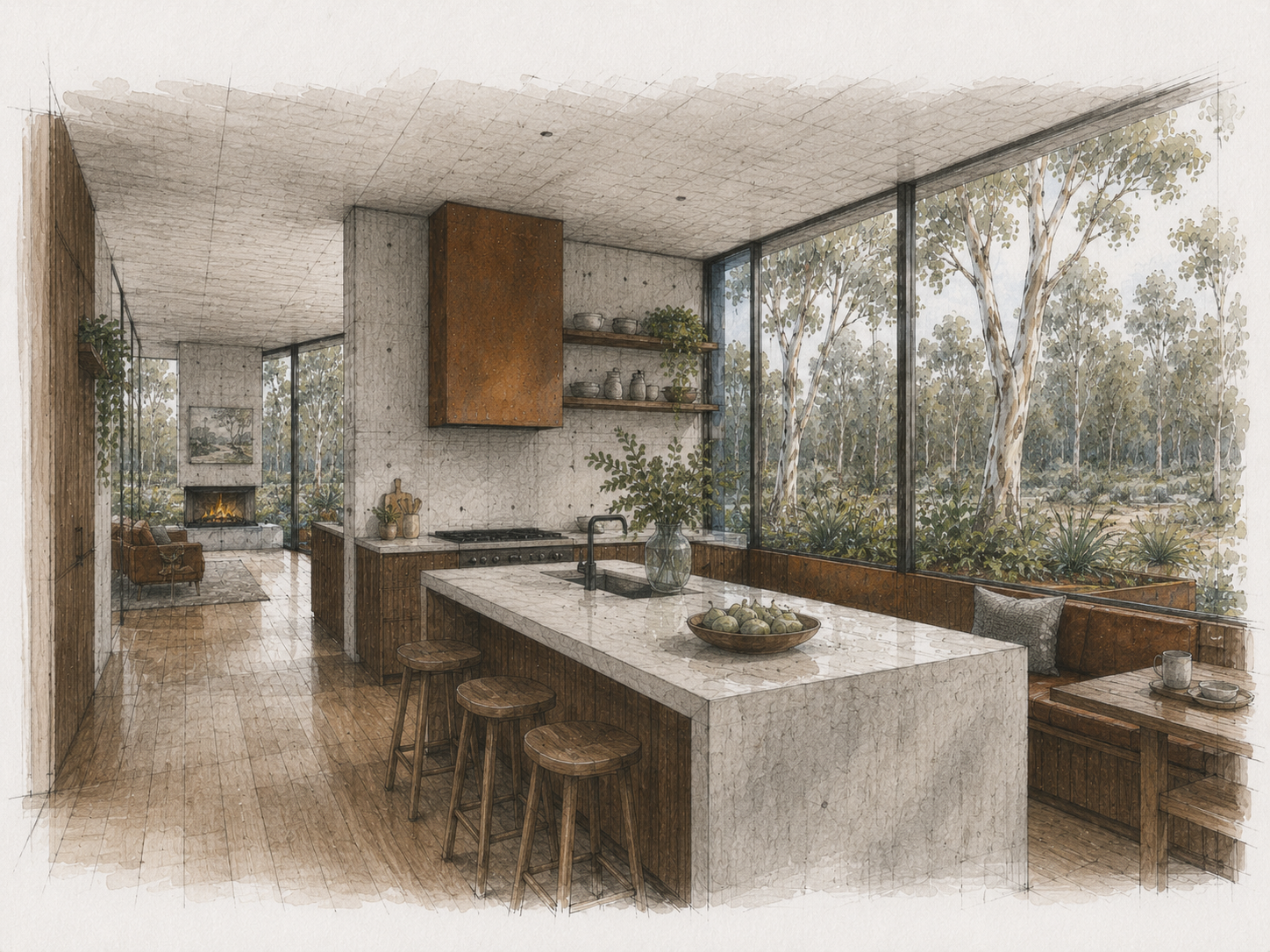
A caption is often treated as secondary, but it can alter the entire experience of an image. It can slow the viewer down, redirect attention, or make visible the conditions that sit just outside the frame.
The best supporting text does not compete with the image. It creates a margin around it. That margin gives the viewer somewhere to stand, a way to enter the work without being told exactly what to think.
The Pace Of Looking
Images are fast. Text is slower. When they sit together, their different speeds can become productive. A short line can ask the viewer to return to a corner of the image, to notice a material change, or to read a view as part of a larger sequence.
In design work, this matters because a project is rarely carried by one image alone. Plans, sections, references, models, and fragments all need relationships. Text can make those relationships legible without flattening them.
Quiet Context
Quiet context is not decoration. It is a form of care. It lets the work remain visual while still offering enough language for the viewer to understand what kind of attention the project is asking for.