Essay
Notes on keeping a working archive
A practical reflection on gathering fragments, returning to references, and letting a body of research become useful over time.

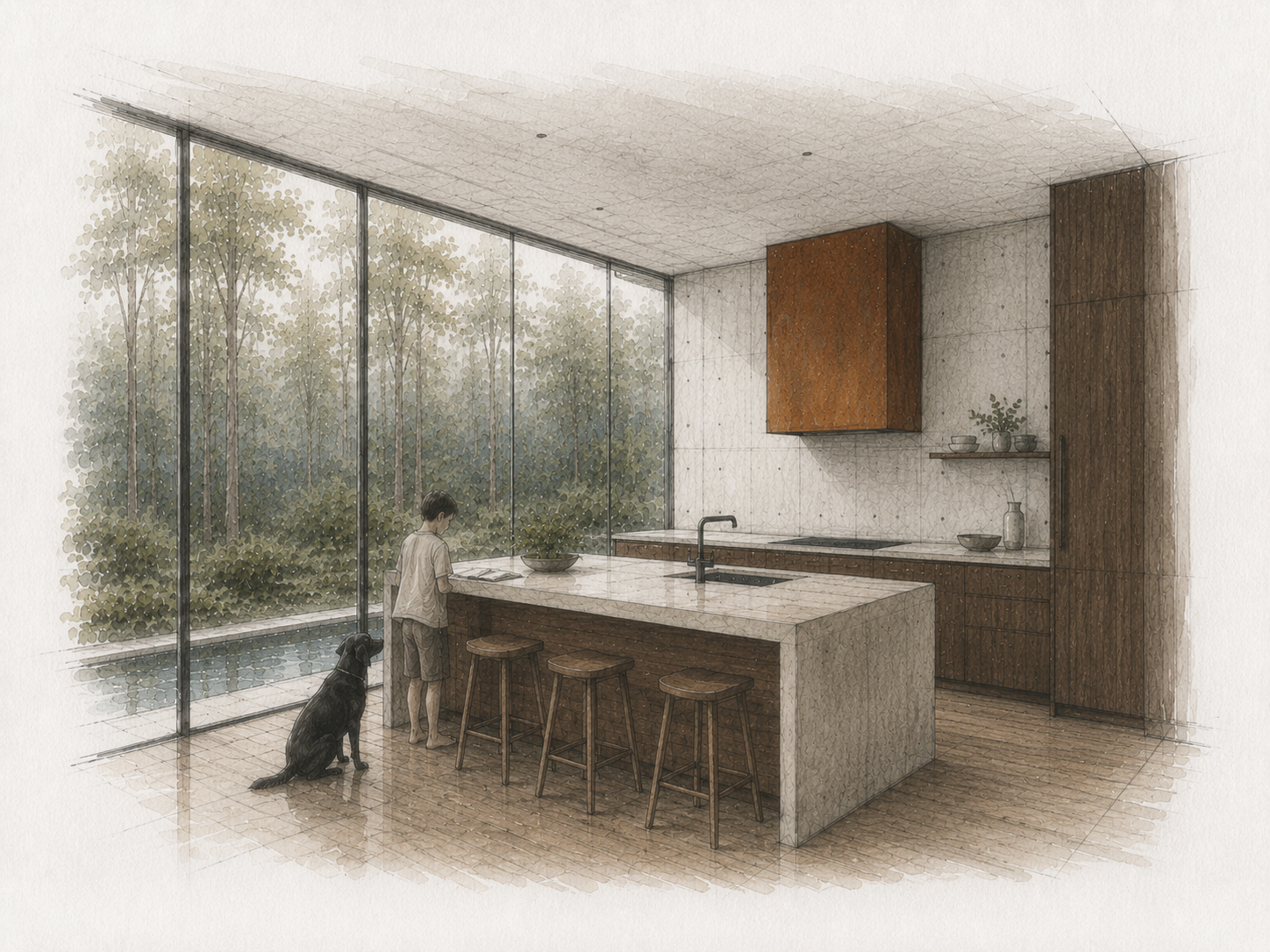
A working archive is not a final collection. It is closer to a studio surface: active, imperfect, and constantly being rearranged. Images, notes, sketches, captions, and half-formed observations sit together before they know what they are for.
The value of the archive is that it holds attention in place. When a reference is kept visible, it can be tested against new work rather than treated as a finished answer. The same image might first describe a material mood, then a threshold condition, then a way of sequencing space.
Returning As A Method
Returning to a reference is different from repeating it. Each return carries a new question. A drawing that once seemed useful for its composition might later become important for its light, its edge conditions, or the way it places a figure against a room.
I find that the archive becomes most useful when it is allowed to stay slightly unresolved. Too much order can close it down. A loose system, with enough structure to find things and enough openness to notice accidents, keeps the material alive.
What The Archive Records
More than anything, a working archive records the movement of thought. It shows what has been looked at, what has been kept, and what continues to ask for attention. In that sense, it is less a storage system than a quiet account of how a project learns to recognise itself.